


Purchase Our Products

Resources
Next-Gen EV Thermal Management: Unlocking Pure Copper via Green Laser 3D Printing
Category:Case Study
Area:IGBT; Advanced Thermal Management ;
Release time:2026-05-13
Last update:2026-09-04
As New Energy Vehicles (NEVs) enter the 800V high-voltage era, the heat flux density of power modules is climbing at an unprecedented rate. Addireen's green laser pure copper 3D printing technology shatters the limitations of conventional manufacturing, unlocking a new pathway for the mass production of high-performance pure copper thermal components.
Data from the China Association of Automobile Manufacturers (CAAM) shows that NEV market penetration has surpassed 50%, with electric drive systems rapidly migrating toward 800V and 1000V platforms. This voltage leap drastically intensifies the thermal management challenges for power modules (IGBT/SiC). Thermal management is no longer an auxiliary design consideration; it has become the core bottleneck dictating vehicle performance and lifespan.
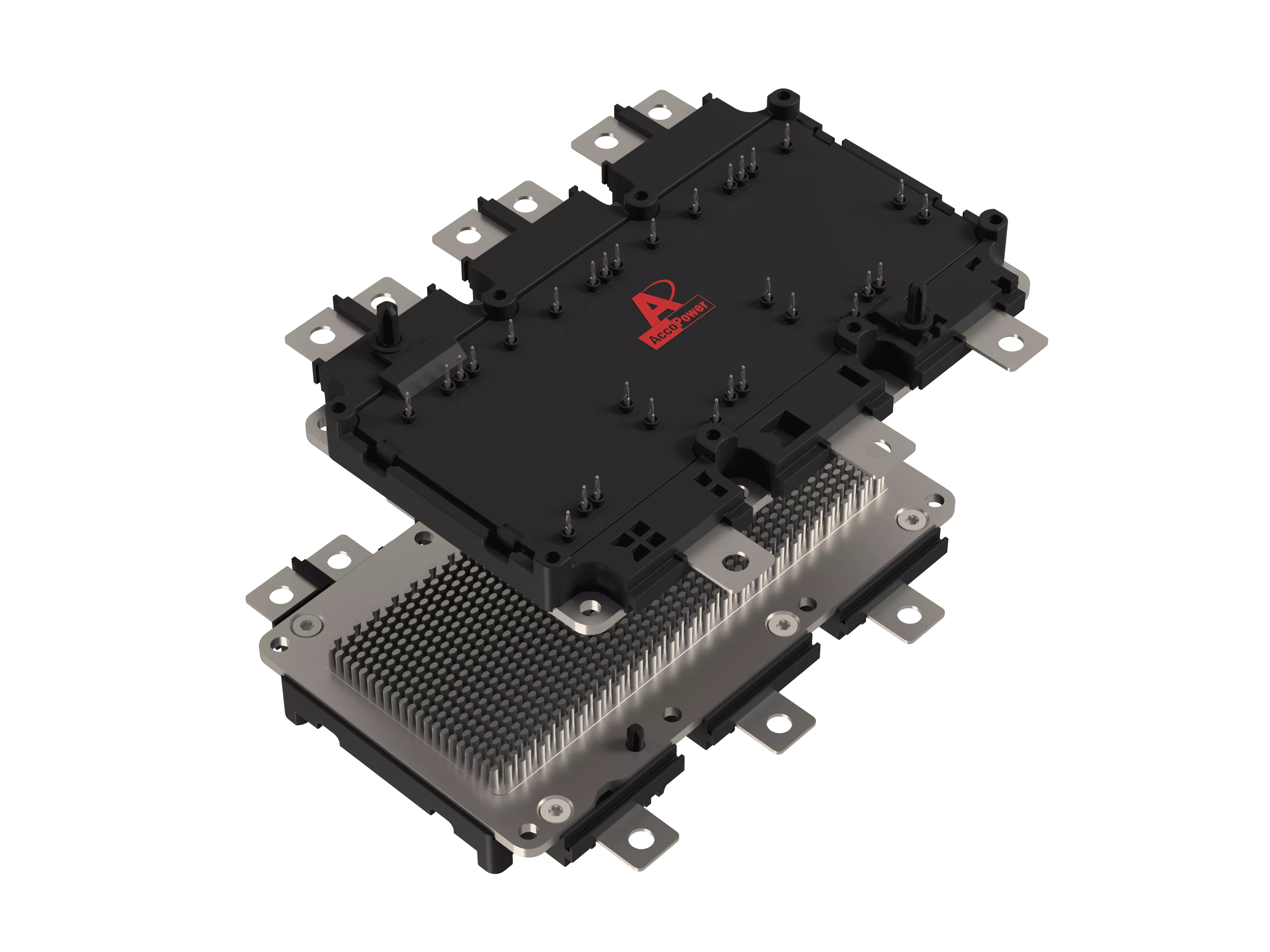
I. Thermal Management Challenges of Power Modules
1. The Thermal Limits of IGBTs
Si-IGBTs remain the undisputed mainstay of current NEV main drive inverters. Their ultimate vulnerability is not absolute "high temperature," but rather "thermal cycling."
Typical Thermal Failure Modes
Failure Mode | Cause | Consequence |
Thermal Runaway | Junction temperature exceeds 175°C → leakage current rises exponentially → positive feedback loop: temperature rise → loss increase → further rise. | Chip burnout, bonding wire fusing, and solder melting in a short time. |
Thermal Fatigue | Repeated temperature cycles cause coefficient of thermal expansion (CTE) mismatch between silicon, solder, copper and other materials. | Solder layer voids, cracks; bonding wire detachment and fracture. |
High-Temperature Aging of Chip Metal | Long-term exposure to high temperatures (>125°C) causes electromigration, thinning and void formation in the metal layer on the chip surface. | Increased contact resistance, intensified heat generation, and eventual open circuit or burnout. |
2. The SiC Paradox: High-Temperature Potential vs. Thermal Bottlenecks
While highly anticipated for its bandgap—three times that of Silicon (Si)—and a theoretical junction temperature tolerance exceeding 200°C, Silicon Carbide (SiC) still faces three practical dilemmas:
l Increased Heat Flux Density: To maximize high-voltage efficiency, SiC modules are designed with tighter packaging and smaller chip areas, inadvertently driving up heat flux density.
l Stacked Interfacial Thermal Resistance: Heat ravels through multiple packaging layers. Each interface acts as a thermal barrier, causing the actual junction temperature to far exceed the case temperature.
l High-Temperature Gate Reliability: The degradation of SiC's gate oxide layer accelerates significantly under peak high-temperature conditions.
Ultimately, the core challenge for SiC is effectively dissipating intensely concentrated heat through the shortest possible path.
II. Dual Limitations of Conventional Pin-Fin Cold Plates
The dominant thermal solution for automotive-grade power modules is the Pin-Fin direct liquid cooling plate, which dissipates heat by directing coolant against pin-shaped fins. However, this architecture is constrained by three rigid bottlenecks:
l Process Constraints: CNC milling and brazing assembly struggle to fabricate denser, highly complex microstructures. Pin-Fin dimensions, density, and layouts are strictly limited by cutting tool precision.
l Stacked Interfacial Resistance: In legacy indirect liquid cooling, heat traverses multiple layers—solder, Direct Bonded Copper (DCB) substrates, and thermal grease. Every interface adds thermal resistance.
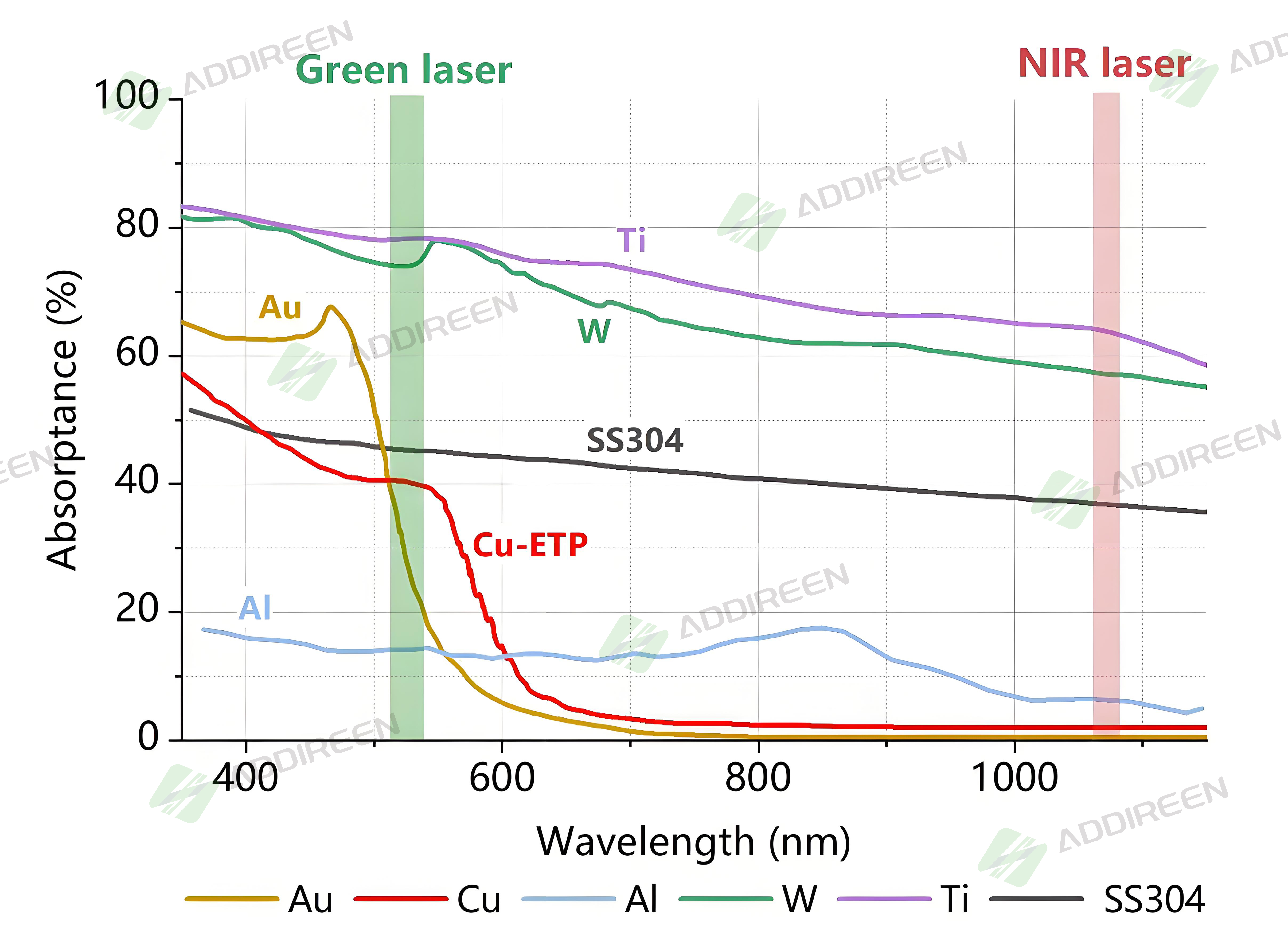
l Material Processing Limits: Pure copper boasts a thermal conductivity of ~400 W/(m·K), 2.5 times that of aluminum. Yet, its high reflectivity makes it notoriously difficult to process. Conventional infrared lasers yield a mere 5% absorptivity on copper, making standard 3D printing nearly impossible.
Constrained by these factors, engineers often compromise by using aluminum heat sinks or overly complex assemblies—solutions that fall short of both performance and cost expectations.
III. Green Laser AM: Unlocking the Ultimate Potential of Pure Copper
Traditional fiber lasers (near-infrared, ~1064 nm) struggle with pure copper's low absorptivity. In contrast, 532 nm green lasers increase absorptivity on pure copper by 8 to 10 times, surpassing 40%. Green laser 3D printing enables micro-channel liquid cooling plates with minimum wall thicknesses of 0.06 mm and a relative density exceeding 99.9%. This breakthrough significantly elevates the thermal and electrical performance of 3D-printed pure copper components, effectively mitigating thermal failure risks in high-voltage devices.
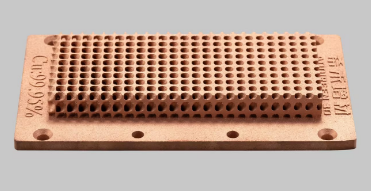
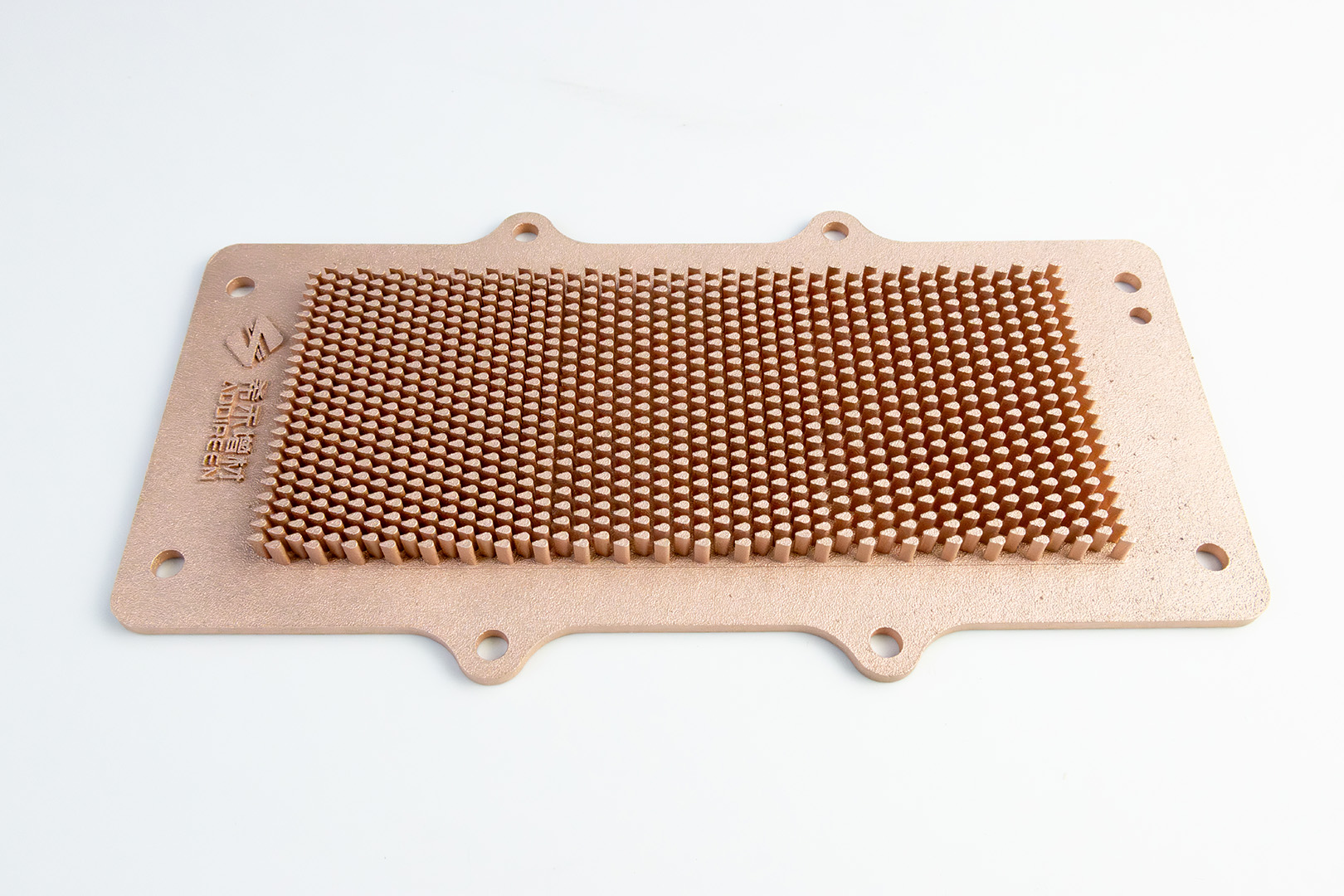
Leveraging Addireen's advanced green laser pure copper printing technology, liquid cooling plates shatter traditional manufacturing limits, achieving unprecedented upgrades in structure, heat transfer, and precision temperature control:
1. Monolithic Integration for Zero Interfacial Resistance
Legacy liquid cooling plates require brazing or multi-part assembly, where every joint adds thermal resistance and leak risk. 3D printing creates a seamless, monolithic structure, ensuring a continuous, uninterrupted heat conduction path.
2. Ultra-Precision Channels for Maximized Convection
3D printing effortlessly produces micro-scale channels, conformal cooling paths, and Triply Periodic Minimal Surface (TPMS) structures that are impossible to machine via CNC. These geometries exponentially multiply the heat exchange surface area within a highly compact volume.
3. Targeted Hot-Spot Mitigation
The thermal distribution across a SiC chip is uneven; localized hot spots are the primary catalysts for failure. 3D printing enables engineers to deploy denser micro-channel arrays precisely beneath concentrated heat sources, shifting from conventional "average cooling" to "targeted thermal extraction."
IV. Industrializing Pure Copper Cold Plates for High-Voltage EVs
Accelerating the 800V/1000V Transition
By maintaining power module junction temperatures at significantly lower levels, green laser pure copper cold plates make ultra-fast charging and extended driving ranges a reality.
Slashing R&D Cycles and System Costs
Traditional heat sink development involves expensive molds and brazing tooling, leading to sluggish iteration cycles. Tooling-free 3D printing drastically reduces the cost and time required for low-volume, highly customized R&D and rapid production.
Empowering a Fully Localized Supply Chain
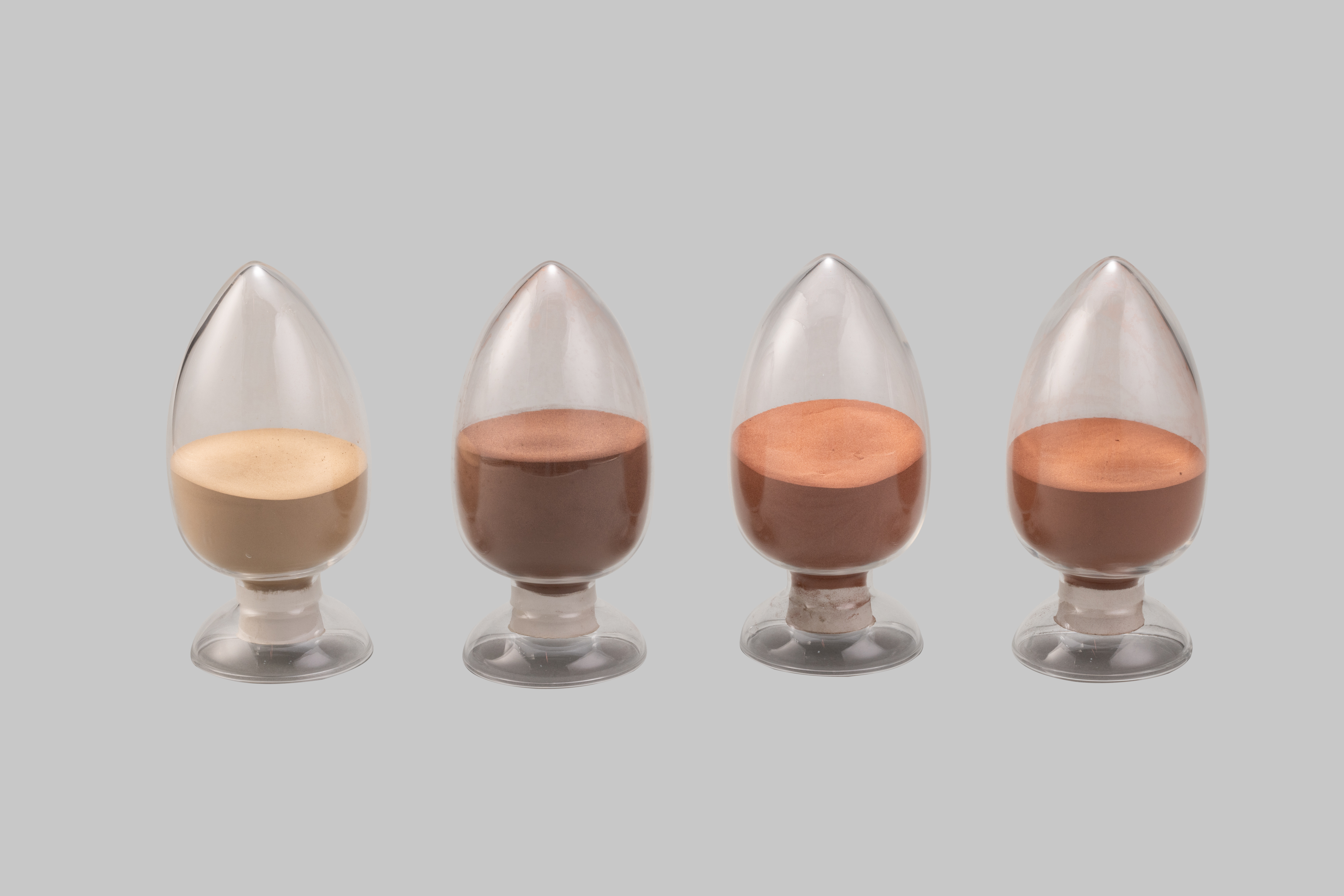
Backed by Gongda Laser's advanced green light source technology, Addireen has built a complete, localized ecosystem. Centered on our proprietary industrial-grade green laser 3D printers and self-developed pure copper and copper alloy powders, we deliver end-to-end high-performance copper AM capabilities.
As 800V high-voltage platforms accelerate their market penetration and SiC power modules transition from charging stations into main drive inverters, the market demand for 3D-printed pure copper liquid cooling plates is surging.
The true engineering value of green laser pure copper 3D printing lies in total design freedom. When thermal management is no longer bottlenecked by legacy manufacturing processes, the performance limits of NEV electric drive systems will be completely redefined.
Looking for 3D Printing Services?
For on-demand manufacturing, part production, and instant quotes, please visit our dedicated Service Bureau platform by clicking the button to the right.
Printing Service
Unlock Green Laser Metal AM: Your Partner for Equipment & Services
Business Cooperation & Equipment Inquiries
Interested in acquiring our Green Laser AM systems or exploring partnership opportunities? Please fill out the form below, and our sales team will contact you shortly.
I confirm that I accept the Privacy Policy.



Subscribe
Sign up for product updates and promotions!
I agree to receive industry news, product and service promotions, and all other relevant Addireen communications.


Contact Us
Shenzhen Addireen Technologies Co., Ltd.
Building 7, Detai Technology Park, Dalang Street, Longhua District, Shenzhen, Guangdong, China.
(+86) 193-5719-8013
Copyright © 2026 Addireen. All Rights Reserved | 粤ICP备2024303078号-1